


Super Tower Mass Loaded Transmission Line Speaker Build Manual
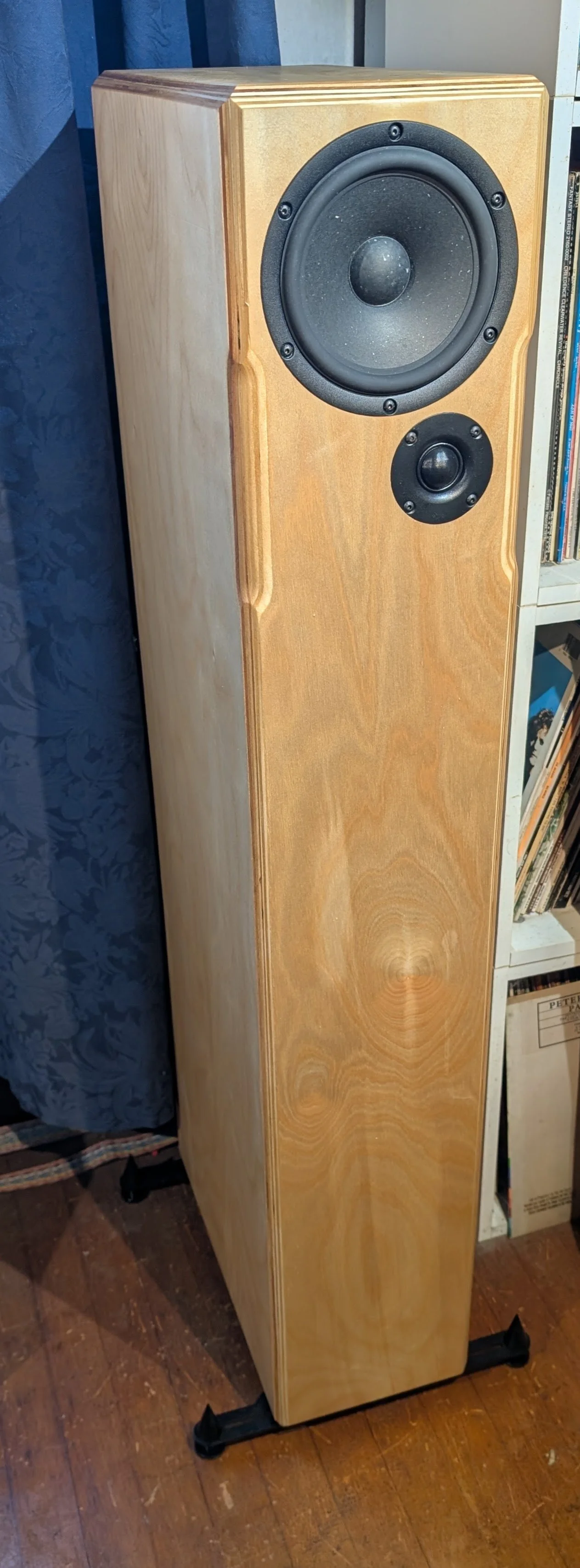
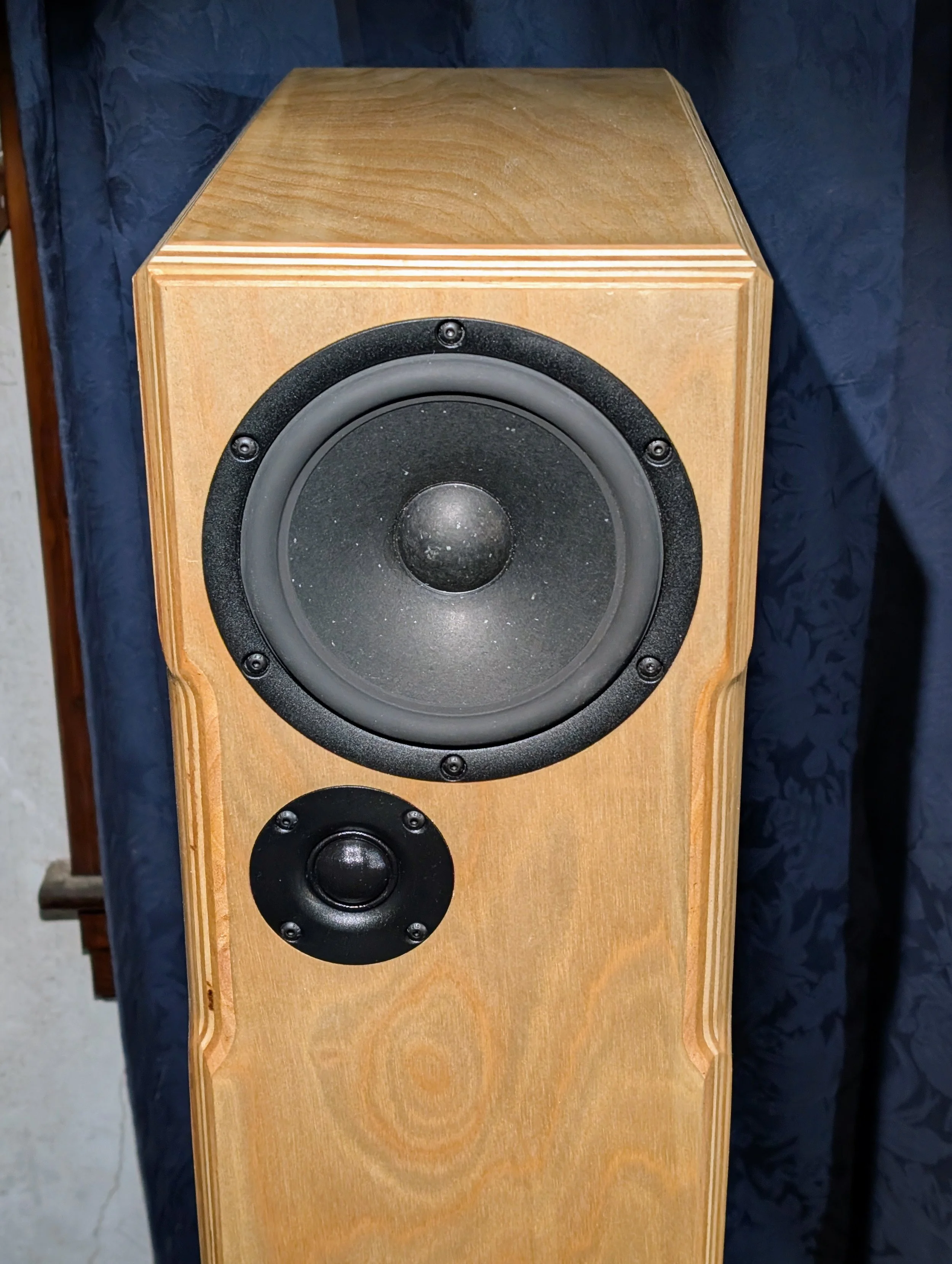
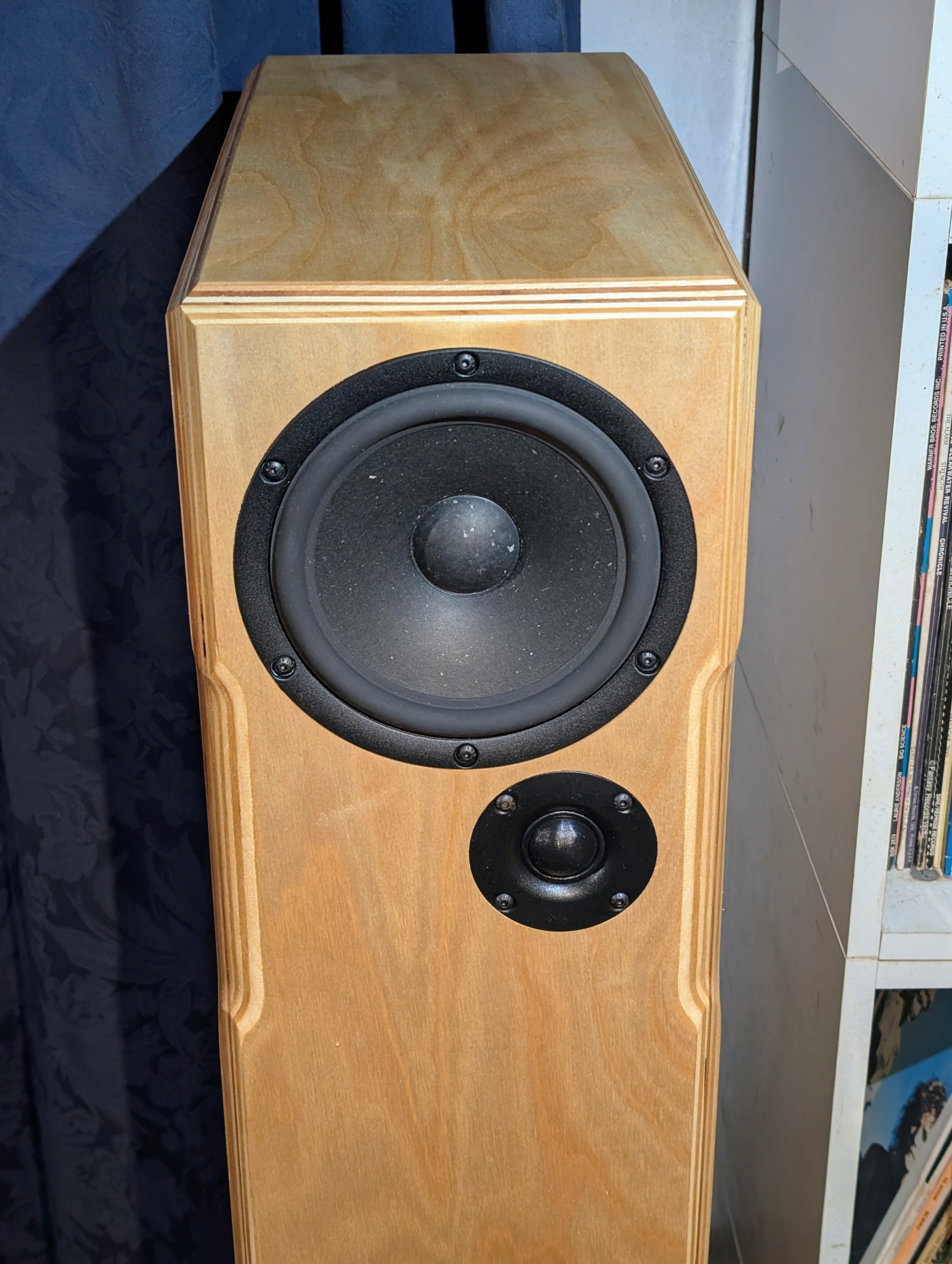
The Super Tower is our new signature design, based on our Tower 6. It uses the top of the line Satori nominal 6” paper cone midwoofer, and the SB Acoustics 1” fabric dome tweeter. The fundamental frequency of the mass loaded transmission line cabinet - is 20Hz.
This speaker has the best sound quality - from bottom to top - of any speaker we have heard in our lifetime. In our reference system, the Super Tower has the deepest and widest and most layered soundstage bar none; if it is there in the recording.
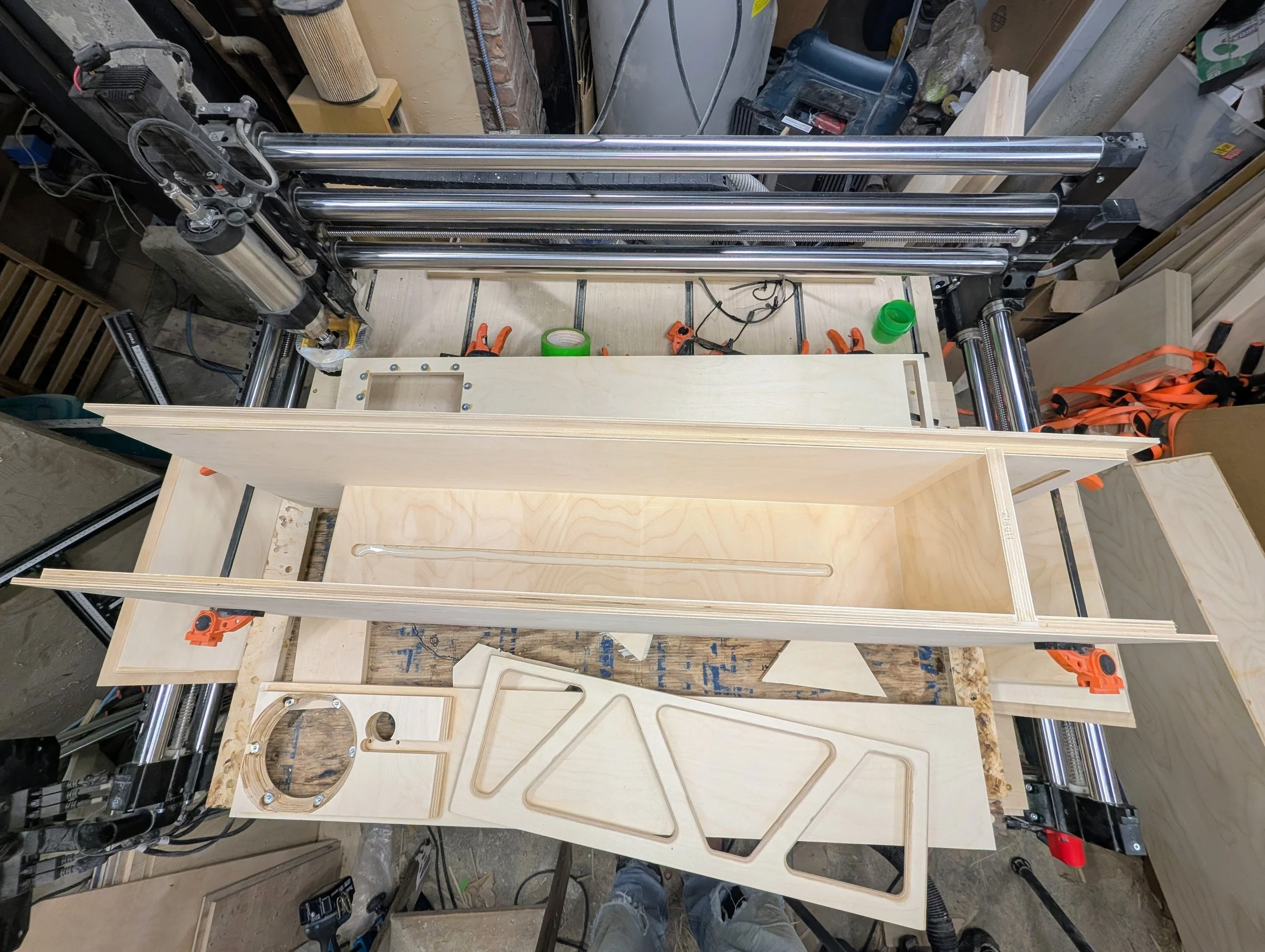
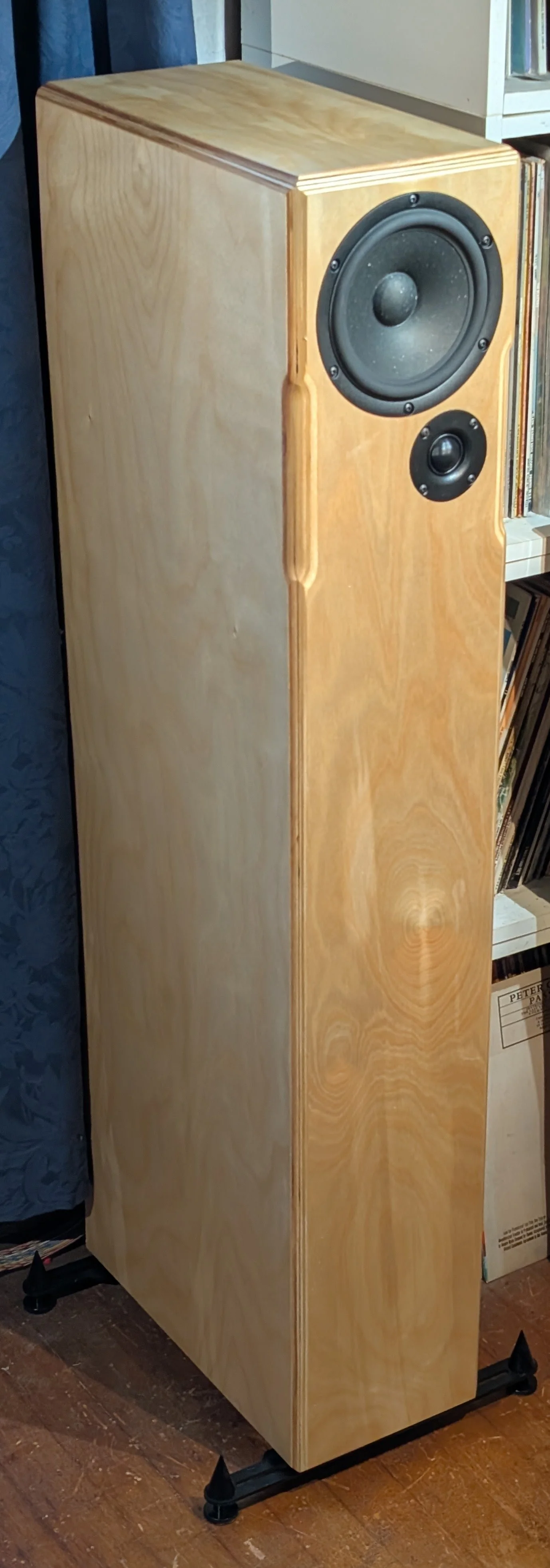
The cabinet is 7.9”W x 45”H x 16”D / 202mm x 1143mm x 407mm and is constructed with 18mm thick material - either Baltic birch of MDF/HDF. Each finished speaker built with Baltic birch weighs a bit under 52lbs / 23.5kg. The external crossover boxes are 8.2”W x 10.7”H x 4.5”D / 209mm x 272mm x 115mm, they weigh about 8lbs / 3.63kg each. The corners of the cabinets are designed to to have a 12mm x 12mm chamfer; but the MDF can be left square, if you choose. The chamfer also has an acoustic function of reducing edge diffraction. I can provide CAD files to make CNC cut files - the build manual includes drawings of the CNC version of the panels. It can be built with a table saw and plunge router, and/or with a CNC machine.
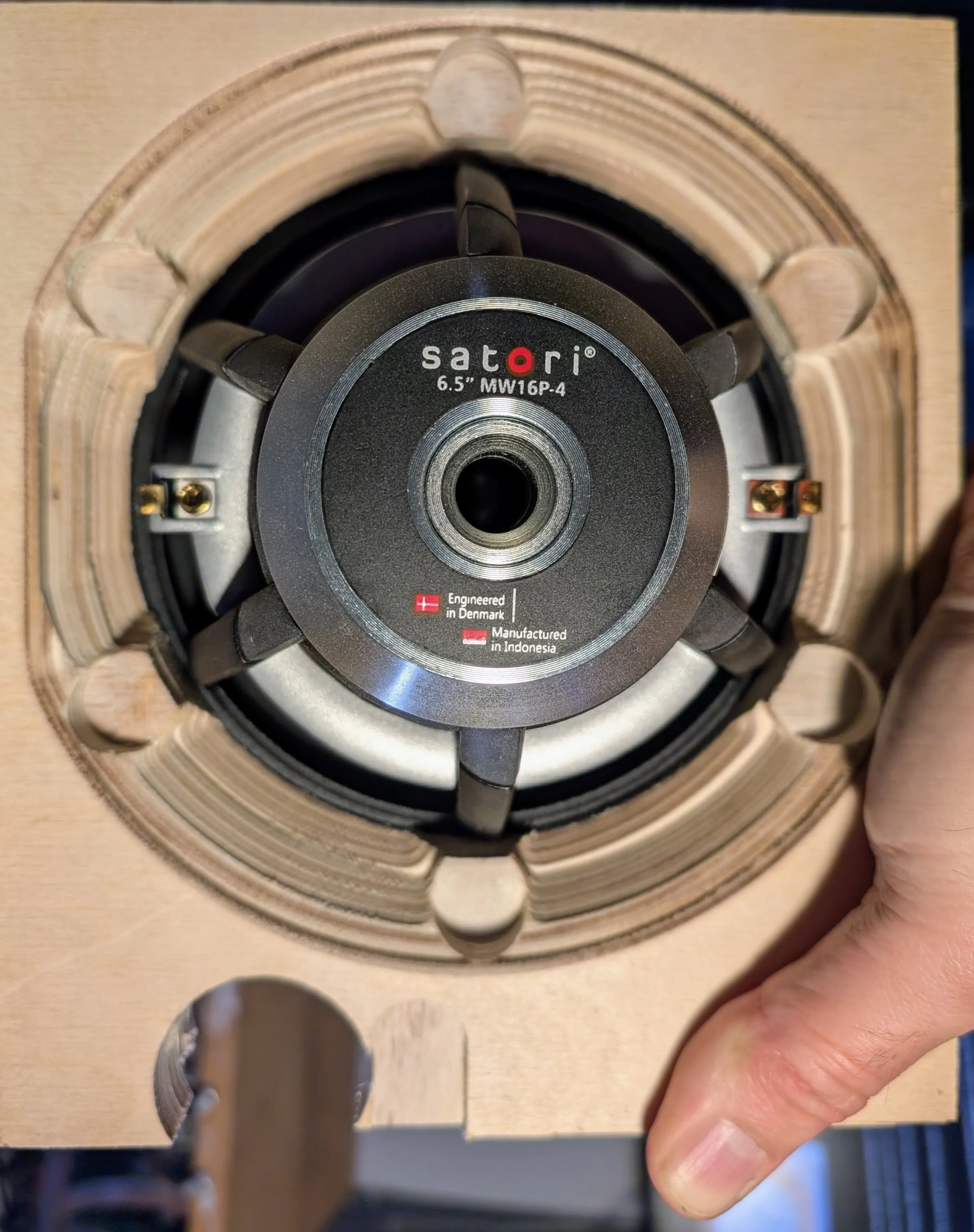
A strong benefit of a “folded” transmission line design is the internal baffles not only form the specific volumes and dimensions required for the correct tuning for the woofer - they also form asymmetrical bracing for the cabinet. there is a brace in the closed end, that greatly strengthens the front baffle. The Super Tower has a 2nd layer of 18mm material around the drivers, which is the most critical area, since the drivers are mounted there.
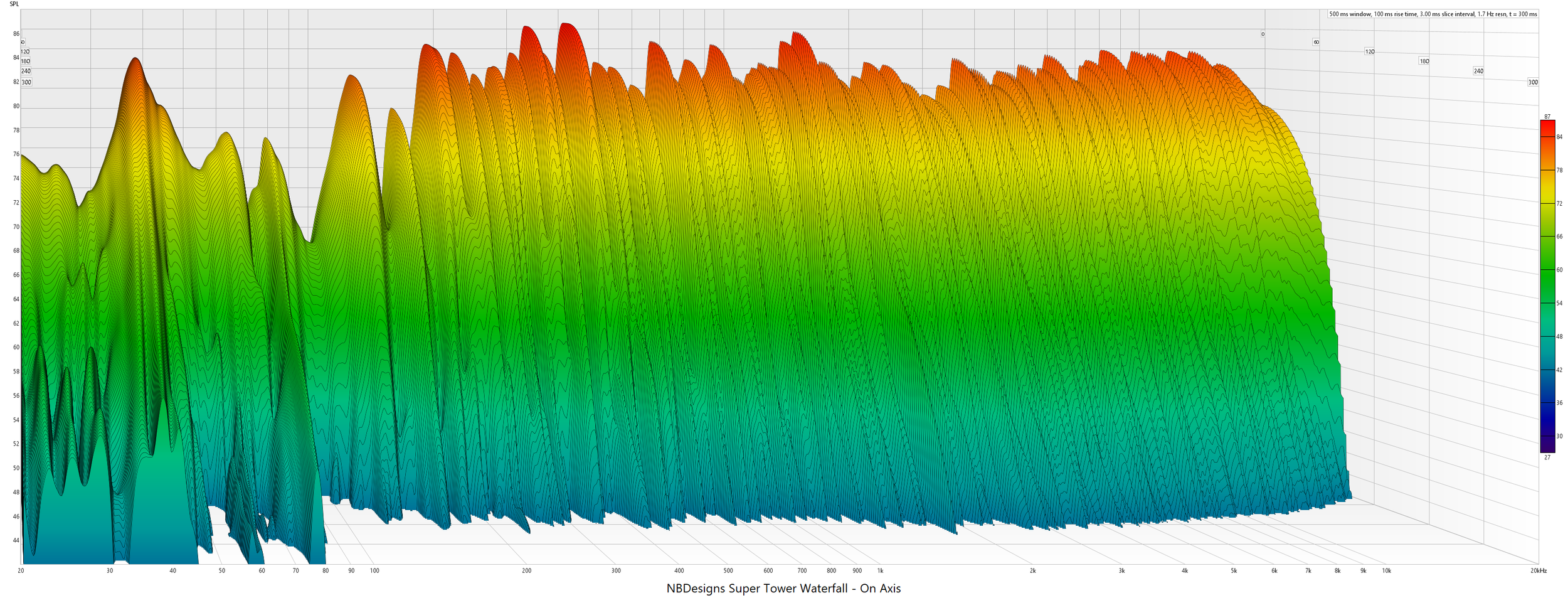
Another less obvious benefit, is the fact that the internal air pressure in a TL design is lower than an equivalent sealed, or even a ported design. This greatly reduces the panel resonances - and this is possibly why the midrange and bass are more open and clearer. The woofer has less of an “air spring” behind it, so it is more closely reproducing the music in the recording. (See waterfall graph below)
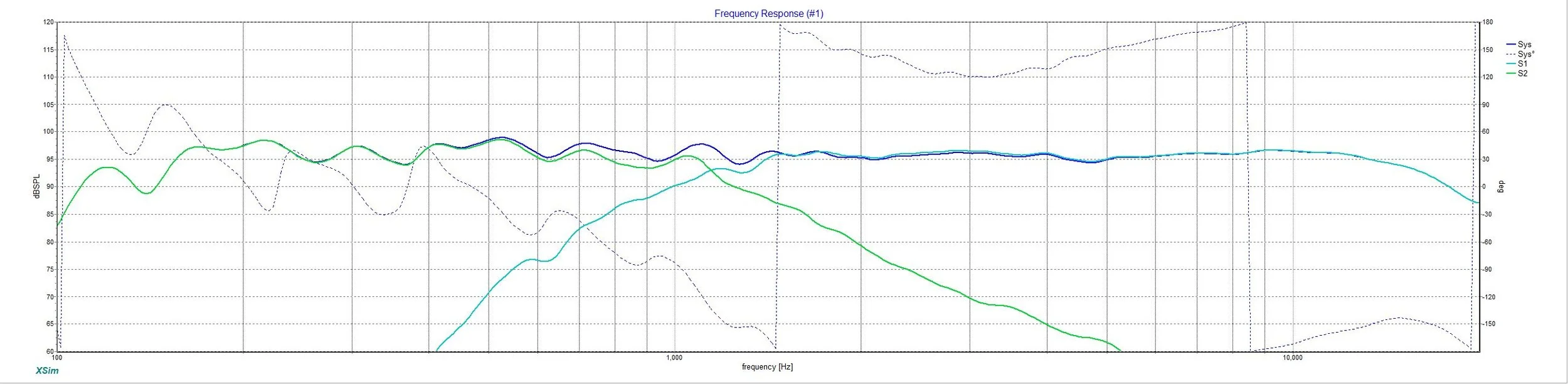
We are using series crossover design with a 4th order slope for the tweeter, and a 3rd order slope for the midwoofer; with the crossover point of ~1.2kHz. A parallel design is what we think of as “conventional” today, but the series type is what was commonly used in the past. A series crossover diverts the signal that is filtered out for one driver, and it goes to the other driver. A series crossover can be slightly more efficient, and they tend to have a smoother more even impedance; which can make them better for use with tube amplifiers.
A transmission line speaker cabinet is a tuned “column” of air behind the driver - it has lower distortion and greater bass extension than conventional sealed or ported designs; with the same size drivers. We use a program called Hornresp (short for Horn Response), and carefully matched the computer acoustic model to the cabinet design, using DataCAD.
The cost of the pair of midwoofers and a pair of the dome tweeters is about $455, from Madisound. They are both made by SB Acoustics. We use all air core inductor coils, and the woofer inductor coil is 14 AWG or 12AWG for a low DCR. This is important for the best possible bass quality. We include “good, better, best” crossover parts lists, with clickable links. The benefits of high quality crossover components cannot be overstated.
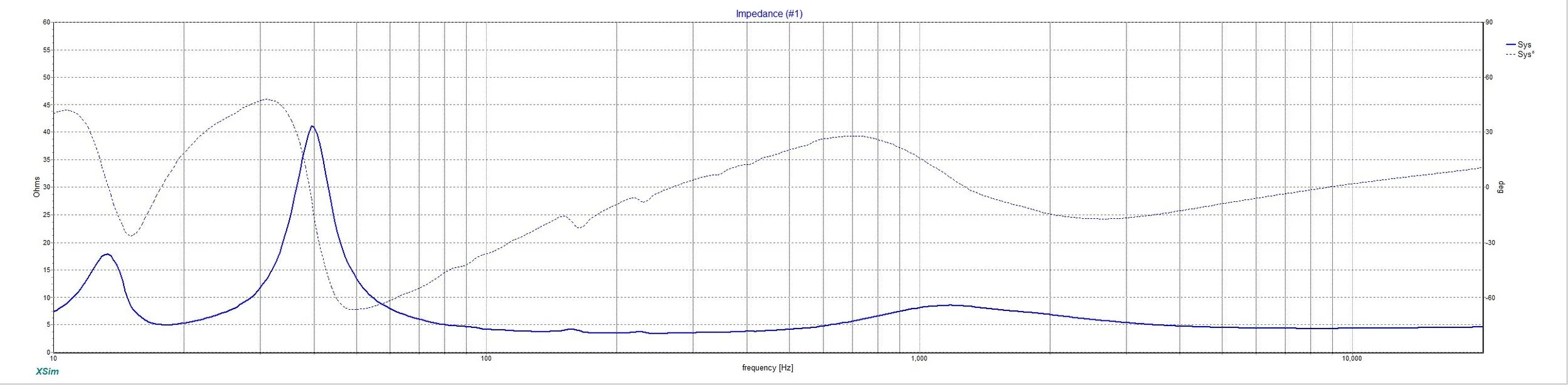
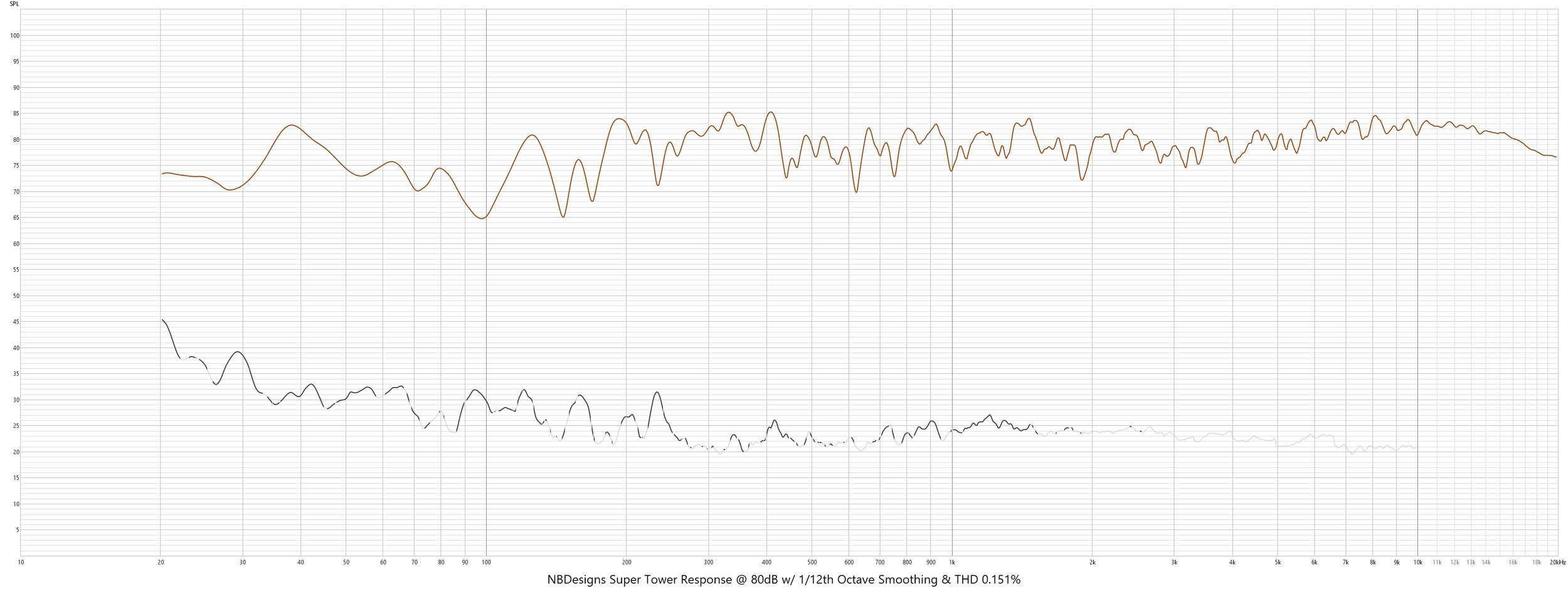
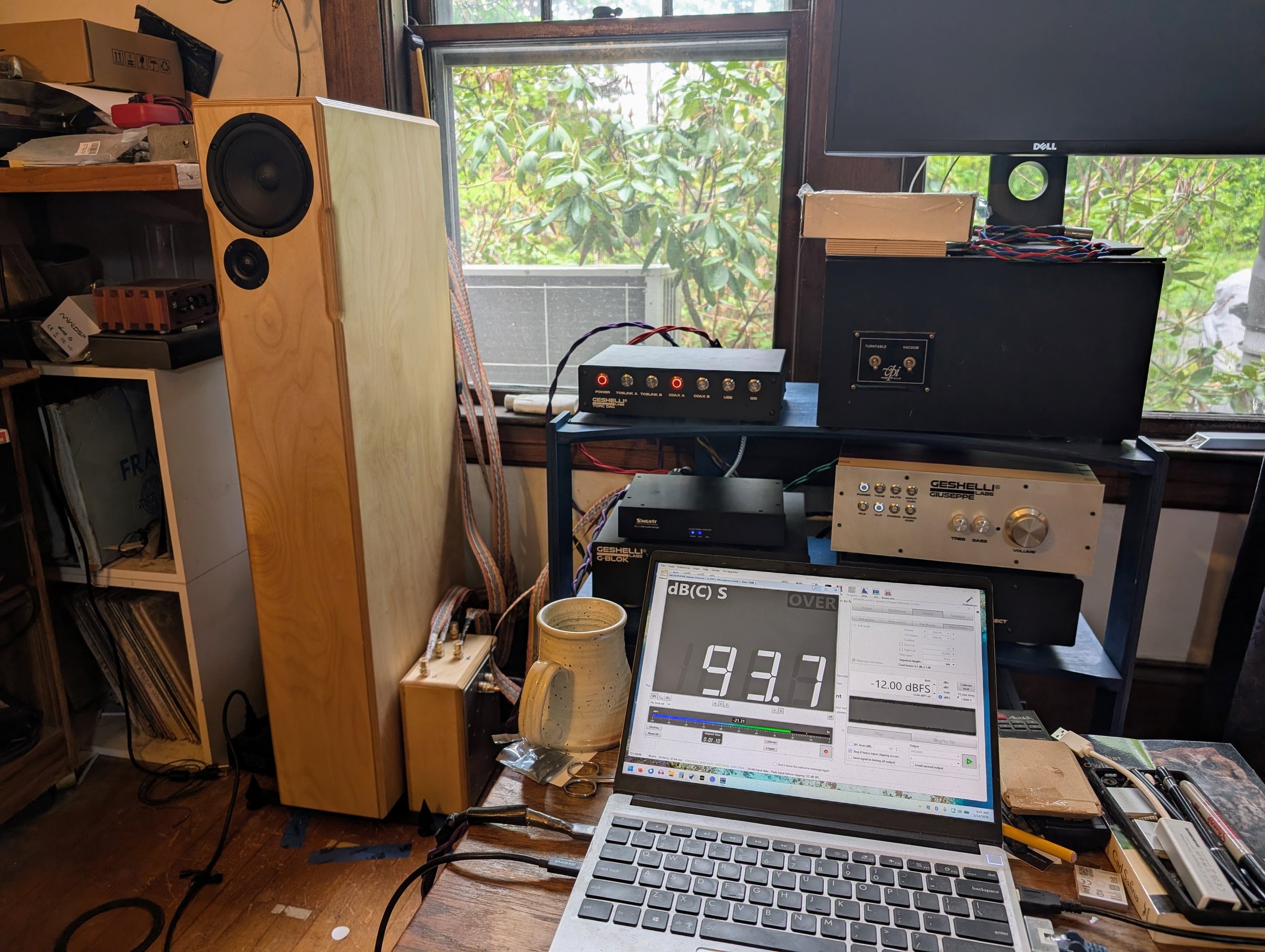
In-room sensitivity measured @ 2.83V @ 1 meter on axis is 93dB SPL (w/ white noise C-weighted). We listen at a lower volume setting on the preamp than the other speakers we own. The Super Tower speakers are 4 ohm nominal impedance - with a minimum of about 3.5 ohms. Our reference amps are the Geshelli Labs Giuseppe preamp (in Unity Mode), with their G-BLOK monoblocks. These are massive overkill - on very rare occasions are they over 1W. We use the amazing value performance AkitikA GT-104 amp - it is rated at 60W/ch @ 4 ohms and ~30W/ch @ 8 ohms - it barely gets warm even after long listening sessions. Any amp that is rated for ~4 ohm speakers will probably work very well, with the Super Tower speakers. If you have a tube amp, the series crossover means these speakers are relatively easy to drive.
The manual includes drawings in inches and in millimeters, Also included are CNC version of the panels. I can provide the DXF (CAD) files for these, if you want to build it this way.
For folks who want to build the Super Tower speakers - but do not have the tools to cut the panels, or do not want to cut them - we will have flat packs available soon; price & availability TBD. They are 18mm Baltic birch, and include the external crossover boxes.
We are very happy that you are able to order assembled crossovers for the Super Tower. E-Zee’s Speaker Solutions has their own parts options, that are similar to our build manual - all air core inductor coils, metalized film capacitors, and very low/non-inductive resistors. If you want to build one of our Super Tower speakers - but building the crossover was holding you back - then you have this option. Visit their website, or email them for pricing. <ezeecrossovers@gmail.com>
We will be building a review pair, and sending them out for reviews - please look out for these on YouTube. We had the Super Tower speakers at AXPONA and Frankenfest (run by some good folks from Audiokarma) this year, and we will have them at Capital Audiofest.
The Super Tower is our new signature design, based on our Tower 6. It uses the top of the line Satori nominal 6” paper cone midwoofer, and the SB Acoustics 1” fabric dome tweeter. The fundamental frequency of the mass loaded transmission line cabinet - is 20Hz.
This speaker has the best sound quality - from bottom to top - of any speaker we have heard in our lifetime. In our reference system, the Super Tower has the deepest and widest and most layered soundstage bar none; if it is there in the recording.
The cabinet is 7.9”W x 45”H x 16”D / 202mm x 1143mm x 407mm and is constructed with 18mm thick material - either Baltic birch of MDF/HDF. Each finished speaker built with Baltic birch weighs a bit under 52lbs / 23.5kg. The external crossover boxes are 8.2”W x 10.7”H x 4.5”D / 209mm x 272mm x 115mm, they weigh about 8lbs / 3.63kg each. The corners of the cabinets are designed to to have a 12mm x 12mm chamfer; but the MDF can be left square, if you choose. The chamfer also has an acoustic function of reducing edge diffraction. I can provide CAD files to make CNC cut files - the build manual includes drawings of the CNC version of the panels. It can be built with a table saw and plunge router, and/or with a CNC machine.
A strong benefit of a “folded” transmission line design is the internal baffles not only form the specific volumes and dimensions required for the correct tuning for the woofer - they also form asymmetrical bracing for the cabinet. there is a brace in the closed end, that greatly strengthens the front baffle. The Super Tower has a 2nd layer of 18mm material around the drivers, which is the most critical area, since the drivers are mounted there.
Another less obvious benefit, is the fact that the internal air pressure in a TL design is lower than an equivalent sealed, or even a ported design. This greatly reduces the panel resonances - and this is possibly why the midrange and bass are more open and clearer. The woofer has less of an “air spring” behind it, so it is more closely reproducing the music in the recording. (See waterfall graph below)
We are using series crossover design with a 4th order slope for the tweeter, and a 3rd order slope for the midwoofer; with the crossover point of ~1.2kHz. A parallel design is what we think of as “conventional” today, but the series type is what was commonly used in the past. A series crossover diverts the signal that is filtered out for one driver, and it goes to the other driver. A series crossover can be slightly more efficient, and they tend to have a smoother more even impedance; which can make them better for use with tube amplifiers.
A transmission line speaker cabinet is a tuned “column” of air behind the driver - it has lower distortion and greater bass extension than conventional sealed or ported designs; with the same size drivers. We use a program called Hornresp (short for Horn Response), and carefully matched the computer acoustic model to the cabinet design, using DataCAD.
The cost of the pair of midwoofers and a pair of the dome tweeters is about $455, from Madisound. They are both made by SB Acoustics. We use all air core inductor coils, and the woofer inductor coil is 14 AWG or 12AWG for a low DCR. This is important for the best possible bass quality. We include “good, better, best” crossover parts lists, with clickable links. The benefits of high quality crossover components cannot be overstated.
In-room sensitivity measured @ 2.83V @ 1 meter on axis is 93dB SPL (w/ white noise C-weighted). We listen at a lower volume setting on the preamp than the other speakers we own. The Super Tower speakers are 4 ohm nominal impedance - with a minimum of about 3.5 ohms. Our reference amps are the Geshelli Labs Giuseppe preamp (in Unity Mode), with their G-BLOK monoblocks. These are massive overkill - on very rare occasions are they over 1W. We use the amazing value performance AkitikA GT-104 amp - it is rated at 60W/ch @ 4 ohms and ~30W/ch @ 8 ohms - it barely gets warm even after long listening sessions. Any amp that is rated for ~4 ohm speakers will probably work very well, with the Super Tower speakers. If you have a tube amp, the series crossover means these speakers are relatively easy to drive.
The manual includes drawings in inches and in millimeters, Also included are CNC version of the panels. I can provide the DXF (CAD) files for these, if you want to build it this way.
For folks who want to build the Super Tower speakers - but do not have the tools to cut the panels, or do not want to cut them - we will have flat packs available soon; price & availability TBD. They are 18mm Baltic birch, and include the external crossover boxes.
We are very happy that you are able to order assembled crossovers for the Super Tower. E-Zee’s Speaker Solutions has their own parts options, that are similar to our build manual - all air core inductor coils, metalized film capacitors, and very low/non-inductive resistors. If you want to build one of our Super Tower speakers - but building the crossover was holding you back - then you have this option. Visit their website, or email them for pricing. <ezeecrossovers@gmail.com>
We will be building a review pair, and sending them out for reviews - please look out for these on YouTube. We had the Super Tower speakers at AXPONA and Frankenfest (run by some good folks from Audiokarma) this year, and we will have them at Capital Audiofest.